2026年4月28日星期二

PASSIVE FIRE FLOOR CLADDING Magnesium Oxide (MgO) boards with a Tongue & Groove (T&G)

 Magnesium Oxide (MgO) boards with a Tongue & Groove (T&G) profile are increasingly used as high-performance subflooring and underlayment. They offer a robust alternative to plywood or fiber cement, particularly in environments requiring high fire ratings and moisture resistance.

Core Technical Specifications

MgO flooring boards are typically denser and thicker than standard wall panels to handle structural loads.

  • Fire Rating: Most T&G MgO boards are Class A1 (Non-combustible). They do not contribute to fire spread and release no toxic smoke.
  • Standard Thickness: Usually ranges from 18mm to 20mm for structural flooring, though thinner boards exist for underlayment.
  • Edge Profile: The T&G system allows for a seamless, interlocking fit that distributes weight across the joints and prevents "stepping" between panels.
  • Density: Generally between 1,000 kg/m³ and 1,200 kg/m³ to ensure flexural strength and impact resistance.
More information, please visit at www.hocre-board.com or send message by whatsapp +86 15001321220

2026年4月23日星期四

2-sided TG 2700x600x16mm fiber cement decking board

 For a 2-sided Tongue and Groove (TG) fiber cement decking board with dimensions of 2700mm x 600mm x 16mm, you are looking at a high-density, structural-grade panel typically used as a subfloor or finished floor base in modular construction or mezzanine applications.

Technical Specifications & Characteristics

FeatureDescription
MaterialCellulose fiber-reinforced cement (Autoclaved)
DensityGenerally ≥1.3g/cm3 for structural flooring
Fire RatingTypically A1 or A2-s1, d0 (Non-combustible)
Edge ProfileTongue & Groove (TG) on the long edges (2-sided)
Surface FinishSanded or smooth; ready for tiling, vinyl, or coating

Key Performance Benefits

  • Structural Integrity: At 16mm thickness, these boards provide a stiff, walkable surface. The TG profile ensures load transfer between panels, reducing "bounce" and eliminating the need for noggings under every joint.
  • Moisture Resistance: Unlike plywood or particle board, fiber cement will not rot, warp, or delaminate when exposed to moisture during the construction phase.

Dimensional Stability: Low thermal expansion/contraction coefficient, which is critical for long-span decking

More information, please visit at www.hocre-board.com or send message by whatsapp +86 15001321220
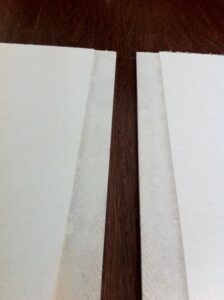
12mm ship lap edge groove boards Mgo panels

 For 12mm MgO Shiplap panels, the focus shifts from structural flooring to decorative and functional wall cladding (facades). Shiplap is highly valued in international markets like the US, Canada, and Australia for its superior water-shedding capabilities and "seamless" aesthetic.

The 12mm thickness is specifically optimized for vertical applications where weight and ease of installation are as important as fire resistance.

Key Technical Specifications (12mm)

FeatureTarget SpecificationPurpose
Density1,000kg/m³ – 1,150kg/m³Balances impact resistance with ease of handling.
Bending Strength>12 MPaEnsures the board can withstand high wind loads.
Fire RatingClass A1 (Non-combustible)Critical for high-rise or boundary wall compliance.
Edge Profile10mm - 12mm overlapProvides a secure seal and aesthetic shadow line.
Water Absorption< 15% (Sealed/Coated)Prevents the board from getting heavy in rain.


The Shiplap Advantage vs. T&G

While T&G (Tongue and Groove) is designed for interlocking floors, the Shiplap (also called a "Rebate Joint") is the preferred edge for 12mm exterior panels because:

  • Water Management: The overlapping "lap" joint creates a natural rain screen. Gravity ensures water sheds off the face of the board rather than being driven into the joint by wind.
  • Movement Allowance: It allows for slightly more thermal and moisture expansion/contraction than a tight T-joint without visible gapping or "tenting."
  • Blind Fastening: It allows for screws or nails to be driven through the recessed "lap," which is then covered by the overlap of the next board, hiding the fasteners for a cleaner look.

 More information, please visit at www.hocre-board.com or send message by whatsapp +86 15001321220

Tongue & Groove Fire-Resistant Mgo board Flooring


For heavy-duty flooring applications, Tongue & Groove (T&G) MgO boards are often the gold standard due to their structural integrity and superior fire resistance compared to traditional plywood or OSB.


https://www.youtube.com/shorts/7KdupDd0MPo

Here is a breakdown of the technical specifications, benefits, and installation considerations for T&G MgO flooring:

1. Key Technical Advantages

  • Fire Rating: Most high-quality MgO boards are classified as non-combustible (Class A1/UL 050). They do not contribute to flame spread and maintain structural stability under high heat.
  • Dimensional Stability: Unlike wood-based subfloors, MgO does not warp, swell, or delaminate when exposed to moisture. This is critical for maintaining the T&G joint integrity.
  • Insects & Mold: Naturally resistant to termites and mold growth, as the inorganic composition does not provide a food source for biological agents.
  • Acoustics: Due to its high density, MgO flooring offers excellent sound dampening properties (STC and IIC ratings) compared to lightweight timber boards.

2. Common Flooring Specifications

Feature

Standard Range

Thickness

18mm to 20mm (Typical for structural subflooring)

Density

$1,000 \text{ kg/m}^3$ to $1,200 \text{ kg/m}^3$

Edge Profile

2-sided or 4-sided Tongue & Groove

Bending Strength

15–20 MPa (Depending on glass fiber mesh layers)

 More information, please visit at www.hocre-board.com or send message by whatsapp +86 15001321220

2026年4月21日星期二

What is the slip resistance rating of fiber cement decking board?

 Slip resistance for fiber cement decking is typically measured using two primary standards: the Pendulum Test Value (PTV) and the R-Rating (Oil-Wet Ramp Test). Because fiber cement is a manufactured product, the rating often depends on whether the board is smooth, textured (wood grain), or has a factory-applied anti-slip coating.

Common Slip Resistance Ratings

For most commercial and residential fiber cement decking products, you will find the following average ratings:

ConditionPendulum Test Value (PTV)R-Rating (DIN 51130)
Dry60+ (Low Slip Potential)R11 – R12
Wet36 – 45 (Low Slip Potential)R10 – R11


Key Technical Factors

  • Surface Texture: Boards with a deep "timber grain" or ribbed profile generally achieve an R11 rating, which is suitable for outdoor walkways and pool surrounds.
  • Coatings: Many manufacturers apply a UV-resistant acrylic coating. If the coating is high-gloss, the wet slip resistance can drop significantly unless an anti-skid aggregate is mixed into the finish.
  • Porosity: Unlike wood, fiber cement does not absorb significant water, which prevents the growth of algae—a major contributor to slipperiness on traditional timber decks.
More information, please visit at www.hocre-board.com or send message by whatsapp +86 15001321220

Tongue and groove fiber cement board Flooring and Underlayment

 When using Tongue and Groove (T&G) Fiber Cement Board for flooring and underlayment, the focus shifts from aesthetics to structural integrity and moisture management.


In technical specifications, this material is often categorized as Structural Subflooring or Tile Underlayment.

Primary Flooring Applications

  • Internal Wet Area Flooring: This is the standard for bathrooms, laundries, and kitchens. The T&G edges ensure the floor doesn't "bounce" or deflect at the joints, which prevents floor tiles from cracking.
  • External Decking Substrate: Used as a base for tiled balconies or verandas. In these cases, Compressed Fiber Cement (CFC) is usually specified because it can handle weather exposure and heavy foot traffic.

Inter-floor Solutions: Often used in multi-story residential buildings to provide a solid feel underfoot that mimics a concrete slab but with much less weight.

More information, please visit at www.hocre-board.com or send message by whatsapp +86 15001321220
2026年4月16日星期四

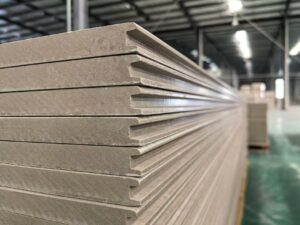
Is Tongue and Groove Subfloor fiber cement board 'Self-Supporting' or does it require a structural sub-base?

 Yes, our Tongue & Groove (T&G) fiber cement boards are engineered as structural, self-supporting subfloor panels. They are designed to be fixed directly to timber or steel floor joists without the need for a secondary structural sub-base (such as plywood or OSB).

However, to ensure structural integrity and meet international building codes, the following parameters must be met:

  1. Thickness: Typically, a minimum thickness of 18mm or 22mm (approx. 3/4") is required for self-supporting applications.
  2. Joist Spacing: The boards are rated for standard centers—commonly 16" or 24" (US) or 450mm/600mm (International).
  3. Joint Support: While the T&G joints provide load transfer between panels along the long edges, all 'short ends' (butt joints) must fall directly on a joist.

More information, please visit at www.hocre-board.com or send message by whatsapp +86 15001321220