2026年5月6日星期三

Mgo board outdoor application

 Magnesium Oxide (MgO) board is highly effective for outdoor applications, provided it is used correctly—primarily as a substrate rather than a finished exterior surface. While it is naturally moisture-resistant and non-combustible, it is not "waterproof" in the sense of being a final weather barrier.

 Primary Outdoor Uses

  • Wall Sheathing: As a direct replacement for plywood or OSB, providing superior fire resistance and mold protection.
  • Soffits and Fascia: Excellent for these areas due to its resistance to rot and high humidity.
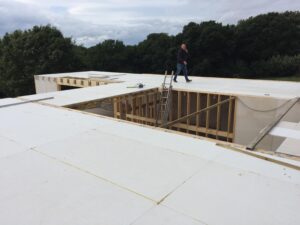
  • Roof Decking: Used as a fire-rated base layer under roofing materials.

Choosing the Right Board

  • Sulfate vs. Chloride: For outdoor use, Magnesium Sulfate (MgSO₄) boards are generally preferred. They are significantly less prone to "sweating" (leaching salt/moisture) and are less corrosive to metal fasteners than standard Chloride-based boards.
  • Density: Ensure you are using a high-density "Exterior Grade" board, which typically has lower water absorption rates.

Pros & Cons for Exterior Use

FeatureBenefit for Outdoors
Fire RatingClass A1 Non-combustible; ideal for wildfire-prone areas.
Mold/PestsInorganic and high pH; will not support mold or attract termites.
Dimensional StabilityDoes not warp or swell like wood-based products when damp.
Freeze-ThawPerforms well in extreme temperature shifts without cracking.

More information, please visit at www.hocre-board.com or send message by whatsApp +86 15001321220

2026年5月5日星期二

What is Fiber Cement Flat Roofing?

 Fiber cement Board  is a composite material made of Portland cement, cellulose fibers, and mineral fillers. When manufactured as a flat roofing sheet, it undergoes a high-pressure steaming process (autoclaving) that results in a material with remarkable dimensional stability and strength.

  1. Unmatched Fire Safety (A1 Fire Rated)

For high-rise developments and industrial hubs, fire compliance is non-negotiable. Most premium fiber cement sheets are A1 or A2-s1, d0 non-combustible, providing an essential safety barrier that traditional bitumen or plastic-based roofing cannot match.

  1. Superior Moisture and Corrosion Resistance

Unlike metal roofing, fiber cement does not rust or corrode in coastal or high-humidity environments. Furthermore, high-quality boards are engineered to prevent "sweating" or leaching, ensuring the sub-assembly remains dry and mold-free.

  1. Low Thermal Expansion

One of the biggest challenges in roofing is the expansion and contraction caused by temperature swings. Fiber cement flat sheets have a very low coefficient of thermal expansion, which reduces the stress on screws, anchors, and frame systems.

Technical Data Sheet (TDS):

Density: ≥1.2g/cm3 for high-impact resistance.

  • Modulus of Rupture (MOR): Class 4 or 5 according to EN 12467 standards.
  • Water Impermeability: No water drops on the reverse side after 24 hours.
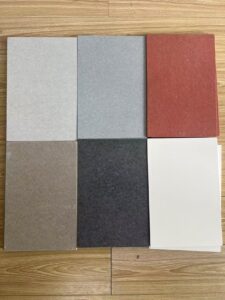
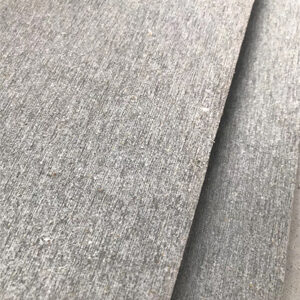
  • Surface Finish: Options include through-colored, UV-resistant coatings, or natural grey for industrial aesthetics.

More information, please visit at www.hocre-board.com or send message by whatsapp +86 15001321220