2026年4月23日星期四

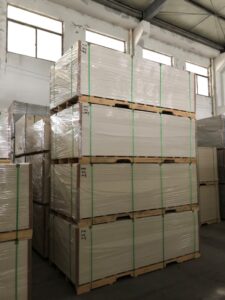
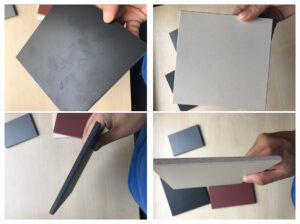
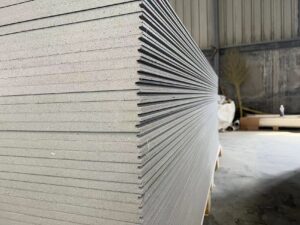
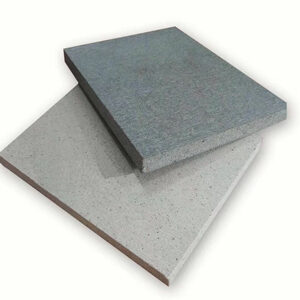
2-sided TG 2700x600x16mm fiber cement decking board

 For a 2-sided Tongue and Groove (TG) fiber cement decking board with dimensions of 2700mm x 600mm x 16mm, you are looking at a high-density, structural-grade panel typically used as a subfloor or finished floor base in modular construction or mezzanine applications.

Technical Specifications & Characteristics

FeatureDescription
MaterialCellulose fiber-reinforced cement (Autoclaved)
DensityGenerally ≥1.3g/cm3 for structural flooring
Fire RatingTypically A1 or A2-s1, d0 (Non-combustible)
Edge ProfileTongue & Groove (TG) on the long edges (2-sided)
Surface FinishSanded or smooth; ready for tiling, vinyl, or coating

Key Performance Benefits

  • Structural Integrity: At 16mm thickness, these boards provide a stiff, walkable surface. The TG profile ensures load transfer between panels, reducing "bounce" and eliminating the need for noggings under every joint.
  • Moisture Resistance: Unlike plywood or particle board, fiber cement will not rot, warp, or delaminate when exposed to moisture during the construction phase.

Dimensional Stability: Low thermal expansion/contraction coefficient, which is critical for long-span decking

More information, please visit at www.hocre-board.com or send message by whatsapp +86 15001321220

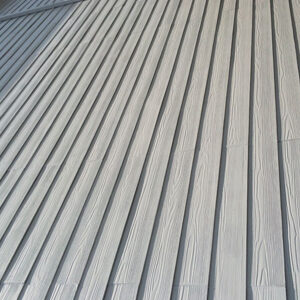
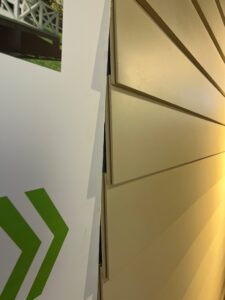
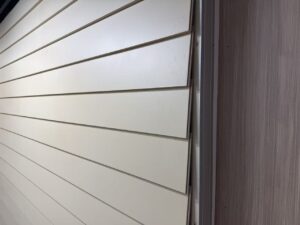
12mm ship lap edge groove boards Mgo panels

 For 12mm MgO Shiplap panels, the focus shifts from structural flooring to decorative and functional wall cladding (facades). Shiplap is highly valued in international markets like the US, Canada, and Australia for its superior water-shedding capabilities and "seamless" aesthetic.

The 12mm thickness is specifically optimized for vertical applications where weight and ease of installation are as important as fire resistance.

Key Technical Specifications (12mm)

FeatureTarget SpecificationPurpose
Density1,000kg/m³ – 1,150kg/m³Balances impact resistance with ease of handling.
Bending Strength>12 MPaEnsures the board can withstand high wind loads.
Fire RatingClass A1 (Non-combustible)Critical for high-rise or boundary wall compliance.
Edge Profile10mm - 12mm overlapProvides a secure seal and aesthetic shadow line.
Water Absorption< 15% (Sealed/Coated)Prevents the board from getting heavy in rain.


The Shiplap Advantage vs. T&G

While T&G (Tongue and Groove) is designed for interlocking floors, the Shiplap (also called a "Rebate Joint") is the preferred edge for 12mm exterior panels because:

  • Water Management: The overlapping "lap" joint creates a natural rain screen. Gravity ensures water sheds off the face of the board rather than being driven into the joint by wind.
  • Movement Allowance: It allows for slightly more thermal and moisture expansion/contraction than a tight T-joint without visible gapping or "tenting."
  • Blind Fastening: It allows for screws or nails to be driven through the recessed "lap," which is then covered by the overlap of the next board, hiding the fasteners for a cleaner look.

 More information, please visit at www.hocre-board.com or send message by whatsapp +86 15001321220

Tongue & Groove Fire-Resistant Mgo board Flooring


For heavy-duty flooring applications, Tongue & Groove (T&G) MgO boards are often the gold standard due to their structural integrity and superior fire resistance compared to traditional plywood or OSB.


Here is a breakdown of the technical specifications, benefits, and installation considerations for T&G MgO flooring:

1. Key Technical Advantages

  • Fire Rating: Most high-quality MgO boards are classified as non-combustible (Class A1/UL 050). They do not contribute to flame spread and maintain structural stability under high heat.
  • Dimensional Stability: Unlike wood-based subfloors, MgO does not warp, swell, or delaminate when exposed to moisture. This is critical for maintaining the T&G joint integrity.
  • Insects & Mold: Naturally resistant to termites and mold growth, as the inorganic composition does not provide a food source for biological agents.
  • Acoustics: Due to its high density, MgO flooring offers excellent sound dampening properties (STC and IIC ratings) compared to lightweight timber boards.

2. Common Flooring Specifications

Feature

Standard Range

Thickness

18mm to 20mm (Typical for structural subflooring)

Density

$1,000 \text{ kg/m}^3$ to $1,200 \text{ kg/m}^3$

Edge Profile

2-sided or 4-sided Tongue & Groove

Bending Strength

15–20 MPa (Depending on glass fiber mesh layers)

 More information, please visit at www.hocre-board.com or send message by whatsapp +86 15001321220
2026年4月21日星期二

What is the slip resistance rating of fiber cement decking board?

 Slip resistance for fiber cement decking is typically measured using two primary standards: the Pendulum Test Value (PTV) and the R-Rating (Oil-Wet Ramp Test). Because fiber cement is a manufactured product, the rating often depends on whether the board is smooth, textured (wood grain), or has a factory-applied anti-slip coating.

Common Slip Resistance Ratings

For most commercial and residential fiber cement decking products, you will find the following average ratings:

ConditionPendulum Test Value (PTV)R-Rating (DIN 51130)
Dry60+ (Low Slip Potential)R11 – R12
Wet36 – 45 (Low Slip Potential)R10 – R11


Key Technical Factors

  • Surface Texture: Boards with a deep "timber grain" or ribbed profile generally achieve an R11 rating, which is suitable for outdoor walkways and pool surrounds.
  • Coatings: Many manufacturers apply a UV-resistant acrylic coating. If the coating is high-gloss, the wet slip resistance can drop significantly unless an anti-skid aggregate is mixed into the finish.
  • Porosity: Unlike wood, fiber cement does not absorb significant water, which prevents the growth of algae—a major contributor to slipperiness on traditional timber decks.
More information, please visit at www.hocre-board.com or send message by whatsapp +86 15001321220
Tongue and groove fiber cement board Flooring and Underlayment

 When using Tongue and Groove (T&G) Fiber Cement Board for flooring and underlayment, the focus shifts from aesthetics to structural integrity and moisture management.


In technical specifications, this material is often categorized as Structural Subflooring or Tile Underlayment.

Primary Flooring Applications

  • Internal Wet Area Flooring: This is the standard for bathrooms, laundries, and kitchens. The T&G edges ensure the floor doesn't "bounce" or deflect at the joints, which prevents floor tiles from cracking.
  • External Decking Substrate: Used as a base for tiled balconies or verandas. In these cases, Compressed Fiber Cement (CFC) is usually specified because it can handle weather exposure and heavy foot traffic.

Inter-floor Solutions: Often used in multi-story residential buildings to provide a solid feel underfoot that mimics a concrete slab but with much less weight.

More information, please visit at www.hocre-board.com or send message by whatsapp +86 15001321220
2026年4月16日星期四

Is Tongue and Groove Subfloor fiber cement board 'Self-Supporting' or does it require a structural sub-base?

 Yes, our Tongue & Groove (T&G) fiber cement boards are engineered as structural, self-supporting subfloor panels. They are designed to be fixed directly to timber or steel floor joists without the need for a secondary structural sub-base (such as plywood or OSB).

However, to ensure structural integrity and meet international building codes, the following parameters must be met:

  1. Thickness: Typically, a minimum thickness of 18mm or 22mm (approx. 3/4") is required for self-supporting applications.
  2. Joist Spacing: The boards are rated for standard centers—commonly 16" or 24" (US) or 450mm/600mm (International).
  3. Joint Support: While the T&G joints provide load transfer between panels along the long edges, all 'short ends' (butt joints) must fall directly on a joist.

More information, please visit at www.hocre-board.com or send message by whatsapp +86 15001321220

Does Fibre Cement Flooring Board Tongue & Groove swell or rot when exposed to moisture?

 One of the primary reasons builders choose fibre cement over timber or plywood is its performance in wet environments. Here is the technical breakdown of how it handles moisture:

  1. Resistance to Rot

Fibre cement is composed of Portland cement, sand, and cellulose fibers. Because it is a cementitious product, it contains no organic material that can serve as a food source for fungi or termites. Unlike wood-based products, it will not decay or rot, even if it remains damp for extended periods.

  1. Dimensional Stability (Swelling)

While all materials have some degree of thermal or moisture movement, fibre cement is considered dimensionally stable.

  • Minimal Expansion: Unlike OSB or plywood, which can swell significantly at the edges and "mushroom," fibre cement’s expansion rate is negligible.
  • T&G Integrity: For Tongue & Groove (T&G) boards, this stability is crucial. It ensures that the joints remain tight and flush, preventing the floor from buckling or the T&G edges from snapping under pressure due to swelling.
  1. Strength When Wet

Most wood-based flooring loses structural integrity when saturated. Fibre cement retains the vast majority of its strength even when wet, making it an ideal substrate for:

  • Wet Areas: Bathrooms, laundries, and kitchens.
  • Construction Delays: If the building is "open to the weather" before the roof is finished, these boards will not be ruined by rain.

Important Note on Installation

Even though the board itself won't rot or swell, moisture management is still important for the overall floor system:

  • Joint Sealing: In wet areas, a polyurethane sealant is typically applied to the Tongue & Groove joint during installation to create a water-resistant seal.
  • Framing: Ensure the timber or steel joists underneath are also protected, as the boards are only one part of the assembly.
More information, please visit at www.hocre-board.com or send message by whatsapp +86 15001321220

2026年4月15日星期三

What is the advantage of fiber cement decking board compared to WPC?


While WPC (Wood Plastic Composite) is a popular choice for residential backyards, fiber cement decking is increasingly preferred for high-end commercial projects and regions with extreme weather.

The advantages of fiber cement over WPC generally fall into three "Industrial Grade" categories: Safety, Stability, and Thermal Performance.

1. Fire Safety (The "Dealbreaker" Advantage)

This is the most significant differentiator in international building codes.

  • Fiber Cement: Naturally non-combustible (typically rated Class A / A1). It does not contribute fuel to a fire and does not emit toxic smoke.

  • WPC: Contains a high percentage of plastic (PE or PVC). Even "fire-rated" WPC is still combustible and will eventually melt or burn in a structural fire.
  • Verdict: In many jurisdictions, fiber cement is the only material allowed for high-rise balconies or public infrastructure.

2. Dimensional Stability

Plastics are highly sensitive to temperature changes, leading to movement.

  • Minimal Expansion: Fiber cement has a very low coefficient of thermal expansion. It will not warp, "snake," or buckle when the temperature swings from a cold night to a hot afternoon.
  • Tight Joints: Because the boards don't move much, you can install them with tighter gaps, creating a more seamless, premium look. WPC requires large expansion gaps (often 5mm-8mm) to prevent the boards from pushing against each other.

3. Heat Dissipation (The "Barefoot" Test)

  • Stays Cooler: Fiber cement is a mineral-based product with high thermal mass and low conductivity. It absorbs heat slowly and releases it effectively.
  • WPC "Hot-Foot": WPC boards, especially darker colors, act like a "heat sink" due to their plastic content. In direct sunlight, WPC can become hot enough to cause discomfort to bare feet or pets; fiber cement remains significantly cooler.

4. Longevity in Harsh Environments

  • No "Mushrooming": Some WPC products can absorb water at the ends where the wood fibers are exposed, leading to swelling or "mushrooming." Fiber cement is inorganic and cannot rot.
  • UV Resistance: Unlike the polymers in WPC which can become brittle or "chalky" after years of intense UV exposure, the structural integrity of fiber cement remains unchanged by sunlight.

5. Summary Table for Quick Reference

Feature

Fiber Cement Decking

WPC (Composite)

Fire Performance

Non-combustible (Class A)

Combustible (Class B/C)

Thermal Expansion

Negligible

Significant

Surface Temp

Stays cooler

Can get very hot

Insects/Rot

100% Resistant

High resistance (but not 100%)

Best For

Commercial, High-rise, Fire-zones

Residential gardens

 More information, please visit at www.hocre-board.com or send message by whatsapp +86 15001321220

How does fiber cement decking board handle extreme UV exposure?

 Fiber cement decking is highly regarded in the international market specifically for its performance in high-UV environments like Australia, the Middle East, and the Southern United States. Unlike Wood Plastic Composites (WPC) or natural timber, fiber cement is an inorganic mineral-based product, which gives it a distinct advantage in sunlight.

Standard decking materials like WPC often contain polyethylenes that can break down (become brittle or "chalky") when exposed to intense ultraviolet radiation.

  • Inorganic Stability: Fiber cement is composed of Portland cement, sand, and cellulose fibers. These components are UV-stable, meaning the structural integrity of the board will not weaken, crack, or flake due to sunlight.
  • Heat Absorption: Fiber cement has lower thermal expansion than plastic-based decks. While dark colors will still absorb heat, the boards won't warp or "snake" when the sun hits them.

More information, please visit at www.hocre-board.com or send message by whatsapp +86 15001321220

2026年4月9日星期四

What is the water absorption rate of Mgo board after 24 hours of immersion?

 The water absorption rate of a high-quality Magnesium Oxide (MgO) board after 24 hours of total immersion typically ranges between 8% and 15% by weight.


However, this value can fluctuate based on the board's density and its chemical formulation (Chloride-based vs. Sulfate-based).

  1. Performance by Board Density

MgO boards are categorized by their density, which directly correlates with their porosity and water resistance:

  • Standard Density (800–900kg/m3): Absorption is usually on the higher end, around 12%–18%. These are often used for internal wall linings.
  • High Density (1,000–1,300kg/m3): Absorption is significantly lower, typically 8%–12%. These are the industry standard for external facades, SIP panels, and sub-flooring.
  1. The "Swelling" Factor (Thickness Change)

In technical submittals, the percentage of weight gain is often less critical than the Thickness Swelling Rate. This measures the dimensional stability of the board—how much it expands when wet.

  • High-quality MgO board: Thickness swelling after 24 hours of immersion is usually < 0.1% to 0.5%.
  • In comparison, traditional wood-based products like OSB or plywood can swell by 10% to 20% under the same conditions.
  1. Chloride-free (Sulfate) vs. Chloride-based

The type of Magnesium salt used affects how the board interacts with moisture over the long term:

  • Magnesium Sulfate Boards: These are preferred for high-humidity environments. They maintain better structural integrity during prolonged immersion and do not exhibit the "sweating" (hygroscopic) issues common in lower-grade boards.
  • Hydrophobic Treatments: Many manufacturers apply a factory-sealed silane or siloxane coating to the "smooth" side of the board. This can temporarily drop the initial absorption rate to < 5%, though the core remains breathable.
  1. Impact on Strength

A key advantage of MgO over gypsum or wood is its wet-strength retention:

  • While the board absorbs a small amount of water, it does not lose its structural "bond."
  • Once the board dries out, it returns to its original dimensions and recovers nearly 100% of its original flexural strength (Bending Strength), whereas gypsum boards would turn to "mush" and OSB would permanently lose structural capacity.
More information, please visit at www.hocre-board.com or send message by whatsapp +86 15001321220


2026年4月6日星期一

Key Technical Advantages of Mgo sulfate board

 What is Magnesium Sulfate (MgSO4) Board?

Unlike the older generation of Magnesium Oxide (MgO) boards which used Magnesium Chloride (MgCl2) as a binding agent, the Sulfate version utilizes Magnesium Sulfate (MgSO4). This chemical shift was engineered to solve the "crying" or "sweating" phenomenon—where chloride-based boards absorb environmental moisture and leach corrosive salt water.


The Significance of the A1 Fire Rating

The A1 Rating is the highest classification under the European Standard EN 13501-1. It signifies that the material is non-combustible and provides:

  • No contribution to fire: The board will not ignite or fuel a flame.
  • No smoke production: Essential for maintaining visibility and air quality during evacuation.
  • No flaming droplets: Prevents the spread of fire to lower levels or adjacent structures.

Chloride-Free (Anti-Corrosion): With chloride levels typically below 0.05%, these boards are safe for use with light-gauge steel framing and standard fasteners without the risk of rapid oxidation.

  Dimensional Stability: MgSO4 boards exhibit minimal expansion and contraction, making them ideal for large-scale facade cladding and roofing sub-layers.

  Water Resistance: They maintain their structural integrity even when saturated, making them suitable for high-humidity environments or projects where the structure may be exposed to weather during construction.

  Health & Safety: Being asbestos-free, silica-free, and low-VOC, they contribute to healthier indoor air quality and are easier for workers to handle during drilling and screwing trials.

More information, please visit at www.hocre-board.com or send message by whatsapp +86 15001321220

2026年4月2日星期四

How to prevent the weep or sweat in high humidity about Mgo board?

 To solve this problem, the industry developed Magnesium Sulfate (MgSO4) boards, often marketed as "Chloride-Free" or "Sulfate-based" MgO boards.


FeatureChloride-based (Standard)Sulfate-based (Premium)
Humidity ResistanceProne to weeping in humid climates.Stable; does not weep or sweat.
Corrosion RiskHigh (corrodes steel/screws).Very Low (safe for metal contact).
PriceGenerally cheaper.More expensive due to raw material costs.
Best UseDry, interior controlled climates.Exterior cladding, wet areas, and humid regions.


More information, please visit at www.hocre-board.com or send message by whatsapp +86 15001321220


2026年4月1日星期三

How does the fiber cement exterior cladding perform in high-moisture or coastal environments?

 Fiber cement cladding is widely regarded as one of the most resilient cladding materials for high-moisture and coastal environments. Unlike wood, which rots, or vinyl, which can become brittle, fiber cement’s inorganic composition allows it to withstand constant exposure to salt air and humidity.

Here is a detailed breakdown of how it performs under these specific conditions:

  1. Resistance to Rot and Corrosion

In coastal areas, the combination of high humidity and salt spray creates an aggressively corrosive atmosphere.

  • Non-Organic Base: Because fiber cement contains no wood fibers (it uses cellulose, which is processed and embedded in a cement matrix), it does not provide a food source for mold or mildew.
  • Salt Air Stability: Unlike metal siding (which can rust) or certain stone veneers that can suffer from salt efflorescence, fiber cement is chemically stable and does not react with chloride ions in the sea air.
  1. Moisture Management and Dimensional Stability

High-moisture environments often cause materials to expand and contract, leading to warping or joint failure.

  • Autoclave Process: High-quality fiber cement cladding is "cured" in a high-pressure steam autoclave. This process creates a chemically stable product with a very low moisture movement coefficient (typically less than 0.1%).
  • Minimal Warping: While wood siding might cup or twist when saturated, fiber cement maintains its shape, ensuring that the building envelope remains tight and water-resistant.
  1. Impact Resistance (Storm Performance)

Coastal regions are frequently prone to high winds and storms.

  • Wind Load: Fiber cement is heavy and dense (typically 1.2 to 1.5  g/cm3). When installed correctly with the proper fastening pattern, it has high wind-load resistance, often meeting strict building codes in hurricane-prone zones (like Florida's High Velocity Hurricane Zone).
  • Debris Impact: It is significantly more "impact resistant" than vinyl or thin aluminum, meaning it is less likely to be punctured by flying debris during a storm.
  1. Paint and Coating Longevity

The sun’s UV rays are often more intense in coastal areas due to reflection off the water.

  • Adhesion: Fiber cement holds paint much better than wood because it doesn't "breathe" (expand/contract) as much. This means the paint film is less likely to crack or peel.
  • Factory Finishing: For coastal projects, factory-applied coatings (like "ColorPlus" technology) are highly recommended. These are baked on in a controlled environment, providing superior UV resistance compared to field-applied paint.

More information, please visit at www.hocre-board.com or send message by whatsapp +86 15001321220

2026年3月24日星期二

Can tongue and groove fiber cement board be used for exterior wall cladding?

 Tongue and groove (T&G) fiber cement board is an excellent choice for exterior wall cladding and is frequently used in both residential and commercial construction.

While standard square-edge fiber cement boards are common, the T&G profile offers specific structural and aesthetic advantages for building envelopes.

  1. Key Benefits for Exterior Use
  • Seamless Aesthetics: The T&G interlocking system allows for a flush surface with tight joints. This is ideal for modern "shiplap" looks or smooth, continuous wall surfaces where visible gaps are unwanted.
  • Enhanced Weather Resistance: The interlocking joint acts as a physical barrier, making it more difficult for wind-driven rain to penetrate the assembly compared to simple butt joints.
  • Structural Stability: Because the boards lock together, the load is shared across the panel face. This reduces the likelihood of individual boards "racking" or warping over time due to temperature fluctuations.
  • Hidden Fastening: Many T&G systems allow for "blind nailing," where the fastener is driven into the tongue and covered by the groove of the next board, resulting in a cleaner finish without visible nail heads.
  1. Critical Installation Requirements

For an exterior cladding system to be successful and maintain its warranty, certain "best practices" must be followed:

  • Weather-Resistive Barrier (WRB): Fiber cement is not a substitute for a house wrap. A high-quality WRB must be installed behind the boards to manage any moisture that bypasses the cladding.
  • Rainscreen System: In many climates, it is recommended (or required by code) to install the boards over furring strips. This creates a cavity that allows for drainage and airflow, preventing moisture from being trapped against the structure.
  • Ground Clearance: Boards should typically be installed at least 6 inches above finished grade (soil) and 2 inches above hard surfaces like steps or driveways to prevent "wicking" of groundwater.
  • Sealants: Even with T&G joints, high-quality, permanently flexible caulk (usually polyurethane or specialized siding sealant) should be used at corners, windows, and door penetrations.


Comparison with Other Materials

FeatureT&G Fiber CementNatural Wood SidingVinyl Siding
DurabilityHigh (50+ years)Moderate (Needs maintenance)Moderate (Can crack/fade)
Fire SafetyNon-combustibleFlammableMelts in high heat
PestsTermite/Rot proofSusceptibleImmune
MaintenanceLow (Paint every 10–15 years)High (Stain/Seal every 3–5)Very Low


More information, please visit at www.hocre-board.com or send message by whatsapp +86 15001321220

Tongue and groove fiber cement board is both waterproof and fire resistant?

 Fiber cement board is a highly durable building material, and when manufactured with a tongue and groove (T&G) profile, it is specifically designed for seamless installation in flooring, subflooring, and wall cladding.

  1. Water Resistance vs. Waterproofing

Fiber cement is composed of Portland cement, sand, and cellulose fibers. While it will not rot, warp, or settle when exposed to moisture, it is technically porous.

  • Dimensional Stability: Unlike plywood or OSB, fiber cement will not swell or lose structural integrity if it gets wet.
  • The T&G Benefit: The tongue and groove joint helps create a tighter seal against moisture penetration between panels, but for a truly "waterproof" assembly (like a bathroom floor or an exterior deck), a waterproof membrane or sealant is still required over the board.
  • Freeze-Thaw Durability: High-quality fiber cement boards are designed to withstand cycles of freezing and thawing without cracking, making them ideal for exterior use
  1. Fire Resistance and Safety

Fiber cement is widely recognized as one of the safest materials regarding fire performance.

  • Non-Combustible: Most fiber cement boards carry a Class A (or Class 1) fire rating. This means the material will not ignite or contribute fuel to a fire.
  • Fire-Rated Assemblies: When used in specific wall or floor assemblies, fiber cement can help achieve 1-hour or 2-hour fire ratings, which is critical for meeting building codes in multi-family or commercial structures.
  • Heat Tolerance: It can withstand high temperatures without releasing toxic smoke, a significant advantage over PVC or wood-based products.
  • Key Technical Comparison
FeatureFiber Cement Performance
Fire RatingClass A (Non-combustible)
Moisture ImpactWon't rot or decay; highly resistant
Termite/PestImmune to wood-boring insects
InstallationT&G allows for flush joints and reduced fastener use


More information, please visit at www.hocre-board.com or send message by whatsapp +86 15001321220

2026年3月23日星期一

What are the advantages of tongue and groove fiber cement board for interior wall cladding?


There are main advantages of tongue and groove fiber cement board for interior wall cladding:

  1. Fast & easy installation

The tongue and groove interlocking design fits tightly, saves labor and construction time.

  1. Moisture resistant & mold proof

Suitable for bathrooms, kitchens, basements and humid indoor areas.

  1. Fire resistant & safe

Class A non‑combustible, asbestos‑free, healthy for indoor living spaces.

  1. Durable & stable

No shrinking, no swelling, no cracking, long service life.

  1. Smooth finished look

Tight joints create a flat, neat wall surface; easy to paint or decorate.

  1. Sound insulation

Better noise reduction compared with ordinary boards.

  1. Termite resistant

Will not be damaged by insects inside the building.


More information, please visit at www.hocre-board.com or send message by whatsapp +86 15001321220

2026年3月18日星期三

fiber cement tunnel board

 Tunnel environments are uniquely harsh, characterized by constant moisture, piston-effect air pressure from passing vehicles, and the necessity for high fire resistance.

Key Technical Requirements

  1. Fire Performance & Passive Protection

In a tunnel, a fire can reach extreme temperatures very quickly (the RWS curve or HCinc curve). Tunnel boards must be Class A1 Non-combustible.

  • Thermal Insulation: The board must protect the structural concrete or steel lining from "spalling" (where moisture in concrete expands and causes the surface to explode).
  • Toxic Fumes: They must be zero-smoke and zero-halogen to ensure visibility and breathability for evacuees.
  1. Durability & Hydrophobic Properties

Unlike standard siding, tunnel boards are often exposed to groundwater seepage and high-pressure washing.

  • Water Absorption: High-quality tunnel boards are autoclaved and often treated with a factory-applied hydrophobic coating.
  • Freeze-Thaw Resistance: In colder climates, the board must withstand hundreds of cycles without delaminating or cracking.
  1. Pressure & Vibration Resistance

The "piston effect" caused by high-speed trains or heavy trucks creates significant positive and negative air pressure.

  • Mechanical Strength: The boards are typically thicker (often 12mm to 20mm) and denser than residential siding.
  • Fixing Systems: They are usually installed on high-grade stainless steel (316L) sub-frames to prevent galvanic corrosion.


  • Common Comparison: Fiber Cement vs. MgO for Tunnels
FeatureFiber Cement (Autoclaved)Magnesium Oxide (MgO)
Moisture ResistanceExcellent; very stable.Risk of "crying" or chloride leaching if not high-sulfate.
Impact ResistanceHigh; brittle but dense.Very high; excellent flexural strength.
InstallationHeavy; requires pre-drilling.Easier to cut, but requires specific fasteners.
CostGenerally more cost-effective.Higher-end, specialized high-sulfate boards are pricier.


More information, please visit at www.hocre-board.com or send message by whatsapp +86 15001321220


2026年3月17日星期二

fiber cement board is Not release toxic gases during a fire

 One of the primary safety advantages of fiber cement board is its behavior under extreme heat. Because it is composed of inorganic materials—primarily Portland cement, sand, and cellulose fibers—it is naturally non-combustible.


Here is a breakdown of why fiber cement is considered a safe choice for fire-rated assemblies:

Fire Performance Characteristics

  • No Toxic Off-gassing: Unlike wood-based panels (which release carbon monoxide and smoke) or certain plastic-based composites and EPS-core panels (which can release toxic fumes like hydrogen cyanide or thick black smoke), fiber cement does not ignite or burn. Therefore, it does not contribute to the smoke toxicity of a building during a fire.
  • Flame Spread Rating: Most high-quality fiber cement boards carry a Class A (or Group 1) fire rating. This means they have a flame spread index of 0, meaning they do not contribute to the spread of a fire.
  • Structural Integrity: While fiber cement is not "fireproof" indefinitely—prolonged exposure to extreme temperatures will eventually cause the material to become brittle or crack (calcination)—it acts as an effective thermal barrier, protecting the structural framing behind it for a significant period.


Comparison of Material Behavior in Fire

MaterialFire ReactionSmoke/Gas Emission
Fiber CementNon-combustibleMinimal/Non-toxic
PVC / VinylMelts and burnsHigh toxicity (Dioxins/HCl)
Untreated WoodIgnites and fuels fireCarbon Monoxide / Smoke
Standard ACMCore can melt/igniteVaries; potential for rapid spread

More information, please visit at www.hocre-board.com or send message by whatsapp +86 15001321220

2026年3月16日星期一

Fiber cement boards are durable in a moist environment and resistant to chlorides and sulphur laden atmosphere

 To ensure durability in environments with high moisture, chlorides (coastal areas), and sulfur (industrial zones or volcanic regions), the selection of the board's chemical composition and density is critical.

Standard fiber cement or common MgO boards may struggle under these specific conditions without the right additives or manufacturing processes. Here is a breakdown of the most resilient options:


  1. High-Density Fiber Cement (HDFC)

Autoclaved, high-density fiber cement is generally the "gold standard" for moisture and atmospheric resistance.

  • Chloride/Sulfur Resistance: HDFC is chemically inert once cured. It does not react with salts or sulfurous gases in the air, preventing the "surface bloom" or degradation often seen in lower-quality materials.
  • Moisture Management: Look for boards with a density $\ge 1.6 \text{ g/cm}^3$. High density reduces the capillary action, meaning the board absorbs significantly less water, which prevents delamination and freeze-thaw damage.
  • Finish: A factory-applied hydrophobic coating or a through-colored matte finish provides an extra layer of protection against chemical ingress.
  1. Magnesium Sulfate (MgSO4) Boards


If you are moving away from fiber cement, Sulfate-based MgO boards are far superior to the older Chloride-based (MgCl2) boards for these environments.

  • Anti-Sweating: Unlike chloride-based boards, MgSO4 boards do not absorb ambient moisture to the point of "crying" or "sweating" salty droplets.
  • Corrosion Resistance: Because they are virtually chloride-free, they will not corrode metal fasteners or steel framing, even in humid conditions.
  • Chemical Stability: Magnesium sulfate is highly stable in sulfur-laden atmospheres, as it is already a sulfate compound, making it less likely to undergo further adverse chemical reactions.

More information, please visit at www.hocre-board.com or send message by whatsapp +86 15001321220

2026年3月12日星期四

Can mgo sulfate board be used as a roof substrate?

 MgO Sulfate board is an excellent choice for a roof substrate, particularly in high-performance or fire-rated roofing systems. Because it is chloride-free, it avoids the structural risks associated with traditional MgO boards when they come into contact with metal roof components.

Role as a Roofing Substrate

In a roofing assembly, the MgO Sulfate board acts as the rigid deck or recovery board. It provides a flat, stable surface for the final waterproofing layer.

  • System Compatibility: It is compatible with most common roofing membranes, including TPO, EPDM, PVC, and modified bitumen.
  • Fire Barrier: Because it is A1 non-combustible, it is often used as a "fire shield" over wood or metal joints to meet strict building codes.
  • Impact Resistance: It provides a hard surface that protects the roof insulation from "puncture damage" caused by hail or foot traffic during maintenance.
  • Why it Beats Other Substrates
FeatureMgO Sulfate BoardGypsum Roof BoardFiber Cement
Fire RatingHighest (A1)GoodGood
Water DamageHigh resistanceCan soften/moldVery high resistance
WeightLightweightHeavyVery Heavy
CorrosionZeroLowZero


More information, please visit at www.hocre-board.com or send message by whatsapp +86 15001321220

2026年3月11日星期三

Why use MgO Sulfate board instead of regular MgO (Chloride) board?

 The primary reason to choose Magnesium Oxysulfate (MgO Sulfate) board over the more common Magnesium Oxychloride (MgO Chloride) board—especially in roofing and structural applications—comes down to a single chemical enemy: Chlorides.

While both are "MgO boards," their performance in real-world environments is drastically different. Here is the technical breakdown:

  1. The "Sweating" Problem (Efflorescence)

Regular MgO Chloride boards are hygroscopic, meaning they naturally absorb moisture from the air.

  • Chloride Board: When the board absorbs moisture, the free chloride ions react to form a brine solution that "bleeds" or "sweats" out of the board. This leads to efflorescence (white powdery deposits) and can cause paint or finishes to peel.
  • Sulfate Board: MgO Sulfate is significantly more stable. It does not "sweat" in high-humidity environments (like a roof cavity), ensuring the board remains dry and structurally sound.
  1. Metal Corrosion (The "Cancer" of Steel)

This is the most critical factor for construction.

  • Chloride Board: Chlorides are highly corrosive to metals. If you use regular MgO board, the chloride ions will eventually attack your steel studs, galvanized screws, and metal roof trusses. This leads to rapid rusting and potential structural failure.
  • Sulfate Board: Because it is 100% chloride-free, it is chemically neutral toward metals. You can use standard fasteners and steel framing without fear of corrosion.
  1. Water Resistance & Dimensional Stability

Roofing environments face extreme temperature swings and moisture.

  • Stability: MgO Sulfate boards have a lower linear expansion rate than Chloride boards. When the roof gets hot or damp, the Sulfate board is less likely to warp, buckle, or crack.
  • Cohesion: Sulfate boards maintain better structural integrity after repeated wetting and drying cycles, whereas Chloride boards can soften or "mush" over time if the brine continues to leach out.
  • Comparison Summary
FeatureMgO Chloride (Regular)MgO Sulfate (Premium)
Chloride ContentHigh (5% – 10%+)Zero / Trace
Corrosion RiskHigh risk to steel/screwsSafe for all metals
Humidity ResponseProne to "sweating"Stable / No sweating
Best Use CaseDry interior partitionsRoofs, Facades, Wet areas
CostLowerHigher


More information, please visit at www.hocre-board.com or send message by whatsapp +86 15001321220

2026年1月28日星期三

Matt finish fibre cement facade panel

 Matte finish fiber cement panels are a top-tier choice for modern architecture, offering a sophisticated, "stony" aesthetic without the gloss or glare of metal or plastic composites. They provide a muted, organic look that shifts beautifully with natural light.

Key Characteristics

  • Aesthetic: Non-reflective, flat finish. It emphasizes the raw texture of the cement and the building's form.
  • Durability: Fiber cement is a composite of sand, cement, and cellulose fibers, making it incredibly tough.
  • Low Maintenance: Unlike wood, it doesn't rot; unlike metal, it doesn't dent or rust.

Technical Performance

FeatureBenefit
Fire RatingUsually Class A (Non-combustible).
Weather ResistanceHighly resistant to UV, freeze-thaw cycles, and high winds.
Eco-FriendlyOften made from sustainable materials and is fully recyclable.
InstallationCan be installed as a Rear-Ventilated Facade (RVF) to improve energy efficiency.


Why Choose a Matte Finish?

  1. Natural Integration: Matte panels blend better with urban and natural landscapes compared to high-gloss finishes.
  2. Hides Imperfections: Glossy surfaces highlight every scratch or fingerprint; matte is much more forgiving.
  3. Color Depth: Darker matte tones (like Charcoal or Slate) look incredibly premium and don't look "plastic-y" under direct sunlight.
More infomration, please visit at www.hocre-board.com or send message by whatsapp +86 15001321220

2026年1月27日星期二

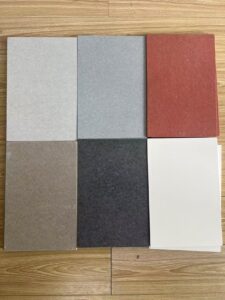
Benefits of "Through-Colored fiber cement board " vs. Painted fiber cement board

 When choosing between Through-Colored (Integrally Pigmented) and Painted (Surface Coated) fiber cement, the decision usually comes down to a trade-off between "natural material honesty" and "perfect color uniformity."

Here is a breakdown of why through-colored boards are generally considered the premium choice for modern architecture.

  1. Durability and Damage Control
  • Through-Colored: Because the pigment is mixed into the wet slurry, the color goes all the way through. If a panel is scratched by a stray branch or chipped during installation, the "wound" is the same color as the surface. It is virtually invisible from a distance.


  • Painted: The color is only a thin layer (microns thick) on top of a gray or off-white cement base. A deep scratch will reveal a bright gray line, requiring immediate touch-up paint to prevent a "scarred" look.


  1. Edge Aesthetics and Fabrication
  • Through-Colored: This is the biggest advantage for architects. You can leave the cut edges exposed. This allows for beautiful mitered corners, chamfered edges, or intricate CNC-cut patterns without needing to paint the sides of every cut piece.
  • Painted: Every time you cut a panel to size on-site, the edge will be gray. You must use edge-sealer or matching paint on every single cut to hide the core, which increases labor costs and introduces the risk of "picture framing" (where the edges look slightly different from the face).
  1. Visual Depth vs. Flat Color
  • Through-Colored: Often finished with a translucent matte glaze. This creates a "lively" surface with subtle sanding marks, fiber clusters, and tonal shifts. It looks like stone or high-end concrete. It has visual depth.
  • Painted: Provides an opaque, solid color. While this offers perfect uniformity, it can sometimes look "plastic" or like metal cladding. It lacks the mineral character of raw cement.
  1. Long-Term Maintenance
  • Through-Colored: These panels age gracefully. There is no paint film to crack, peel, or blister. Over 20–30 years, they may develop a slight "patina" (like natural stone), but the structural color remains.
  • Painted: Over time, UV exposure can break down the chemical bonds of surface paint. In 15–20 years, a painted facade may require repainting to maintain its original luster, whereas through-colored boards are "one and done."


Comparison Summary

FeatureThrough-Colored fiber cement board Painted fiber cement board
AestheticRaw, natural, concrete-likeVibrant, uniform, solid
Scratch VisibilityVery LowHigh
Edge TreatmentNatural (no treatment needed)Must be painted/sealed
Color RangeEarthy, muted mineral tonesUnlimited (any RAL/NCS color)
CostHigher (Material cost)Lower (Material cost)
LaborLower (Less edge finishing)Higher (More on-site painting)


More information, please visit at www.hocre-board.com or send message by whatsapp +86 15001321220

2026年1月25日星期日

Through-coloured sanding texture fiber cement facade

 Through-colored, sanding-textured fiber cement is a high-performance facade material where the pigment is integrated throughout the entire panel. Unlike surface-painted boards, the color is consistent from the face to the core, and the surface is mechanically sanded to create a raw, tactile aesthetic.

Key Characteristics

  • Through-Colored: The color pigments are mixed into the "slurry" before the board is pressed. This means that if the panel is scratched or cut, the color remains identical at the core.
  • Sanded Surface: The panels undergo a factory sanding process that leaves fine, directional sanding lines. This reveals the natural, raw texture of the fiber cement matrix.
  • Natural Variation: Because it is a mineral-based product, you will see subtle "lively" nuances in hue and tone between panels, which architects often use to give a building a dynamic, non-uniform look.
  • Technical Benefits
FeatureBenefit
DurabilityHigh-density material resistant to impact, rot, and insects.
ColorfastnessUV-resistant pigments mean the facade won't "peel" or "chip" like paint.
Fire SafetyTypically rated A2-s1, d0 (non-combustible).
Low MaintenanceNo repainting required; it develops a natural patina over time.
Edge AestheticsEdges do not need to be painted or hidden after cutting, as they match the face.


More information, please visit at www.hocre-board.com or send message by whatsapp +86 1501321220

What is difference of Fiber Cement vs. MgO Sulfate for Facades?

 When comparing Fiber Cement and MgO Sulfate (MOS) Board for facades, the choice often comes down to a trade-up between proven aesthetic durability (Fiber Cement) and superior technical safety/handling (MgO Sulfate)


While both are non-combustible alternatives to wood or plastic, they behave very differently in real-world exterior conditions.

Technical Comparison Table

FeatureFiber Cement (FC)MgO Sulfate (MOS)
Primary AdvantageAesthetic longevity & UV resistanceFire safety & Moisture stability
WeightHeavy (1,400+ kg/m3)Lighter (1,000 - 1,100 kg/m3)
Moisture ResponseCan absorb water; potential for "dark spots"Highly stable; does not swell or warp
Fire RatingClass A1/A2 (Up to 750℃)Class A1 (Withstands >1,200℃)
InstallationHard to cut; requires diamond bladesEasy to cut; "Score and Snap" or wood tools
SustainabilityHigh carbon footprint (Portland cement)Low carbon footprint; recyclable


Key Differences for Facade Applications

Fire Safety: The "Melt" vs. "Char" factor

  • Fiber Cement: While non-combustible, fiber cement can crack or "spall" when exposed to extreme thermal shock.
  • MgO Sulfate: It has a much higher melting point and better thermal insulation. In a rear-ventilated facade, MgO Sulfate acts as a superior thermal shield for the building's insulation layer during a fire.

Moisture & "The Breathability Factor"

  • Fiber Cement: Often contains cellulose (paper/wood) fibers. If the exterior coating fails, the board can absorb water, leading to localized swelling or mold over decades.
  • MgO Sulfate: Being entirely inorganic, it is naturally mold-proof. Crucially, unlike "Chloride" MgO boards, the Sulfate version will not leach salt or "sweat" in humid coastal air, which protects your metal mounting system from rust.

Aesthetics and Finishing

  • Fiber Cement: This is the winner for "ready-to-wear" facades. Brands like Equitone or James Hardie provide panels that are through-colored or textured to look like stone or wood.
  • MgO Sulfate: Usually sold as a "raw" technical board. While it can be painted or rendered, it typically requires an additional coating step on-site unless you purchase pre-finished architectural MOS panels.

Which one should you choose?

  • Choose Fiber Cement if: You want a finished, "out-of-the-box" decorative look with a 30-year proven track record for exterior colors and textures. It is the industry standard for high-end rainscreen aesthetics.
  • Choose MgO Sulfate if: Your priority is structural safety and ease of work. It is ideal if the facade will be rendered (stuccoed) or if you are working in a region with extreme fire codes or very high humidity where traditional boards might fail or be too heavy for the frame.


More information, please visit at www.hocre-board.com or send message by whatsapp +86 15001321220

2026年1月22日星期四

Can Mgo sulfate board be used in high-humidity areas?

 MgO Sulfate Board is highly recommended for high-humidity areas. In fact, its superior performance in moisture-prone environments is the main reason architects and builders choose it over the cheaper Chloride-based MgO boards.

Here is why it excels in humid conditions:

  1. Zero "Sweating" (Non-Hygroscopic)

The most critical advantage is that Magnesium Sulfate (MgSO4) does not attract moisture from the air.

  • Chloride boards are "hygroscopic," meaning they pull water vapor out of the air. In high humidity, this causes "weeping"—salty water droplets forming on the board surface that destroy paint and promote mold.
  • Sulfate boards stay dry and stable even at 95% relative humidity.
  1. High Dimensional Stability

MgO Sulfate boards absorb significantly less water than most other building panels.

  • Minimal Swelling: Tests show that even after 22 weeks in high-humidity conditions, quality sulfate boards show almost zero change in size or thickness.
  • Resistance to Warping: Unlike gypsum (drywall) or plywood, it does not soften, sag, or delaminate when exposed to steam or dampness.
  1. Strength Retention

All boards lose some strength when they get wet, but MgO Sulfate boards are much more resilient:

  • Sulfate Board: Typically retains about 70-80% of its strength in high-humidity environments.
  • Chloride Board: Can lose nearly half of its structural strength ($~45\%$) as the chloride bonds weaken in wet conditions
  1. Mold and Mildew Immunity

Because the board is entirely inorganic, it provides no food source for mold spores. In a humid bathroom or basement where organic materials like paper-faced drywall would rot, MgO Sulfate board remains unaffected.

Best Practices for High-Humidity Installation

While the board itself is moisture-resistant, a successful installation depends on the system:

  • Seal the Edges: The cut edges of the board are its most vulnerable point. Always use a waterproof sealant or primer on all edges before installation.
  • Tile Backer Use: It is an excellent substrate for tiles in showers and steam rooms, but you should still use a waterproof membrane (like a liquid-applied guard) over the joints and screw heads for total protection.
  • Fasteners: Even though the sulfate board is non-corrosive, always use Grade 304 or 316 Stainless Steel screws in high-humidity or coastal areas to ensure the entire system lasts as long as the board.

Where can you use it?

  • Bathrooms & Wet Rooms: As a tile backer or painted wall.
  • Indoor Pools & Saunas: Where humidity is constant.
  • Basements: Where dampness often ruins traditional drywall.
  • Kitchens: Especially behind sinks and industrial cooking areas.


More information, please visit at www.hocre-board.com or send message by whatsapp +86 15001321220

Why is Mgo Sulfate board better than Chloride Mgo board?

 MgO Sulfate board (Magnesium Oxysulfate / MOS) is considered a "second-generation" advancement over the traditional Chloride MgO board (Magnesium Oxychloride / MOC).


The primary reason it is "better" is that it solves the two most significant failures of the original technology: metal corrosion and "sweating" (leaching).

  1. No "Sweating" or Leaching (Non-Hygroscopic)

Traditional Chloride boards use Magnesium Chloride (MgCl2), which is highly hygroscopic—meaning it naturally attracts moisture from the air.

  • The Problem: In humid environments, Chloride boards absorb so much water that droplets of salty brine form on the surface. This is known as "sweating," "crying," or "weeping." This moisture ruins paint, causes wallpaper to peel, and encourages mold on adjacent materials.
  • The Sulfate Advantage: Sulfate boards use Magnesium Sulfate (MgSO4), which is not hygroscopic. Even in 90% humidity, the board remains dry and stable because it does not pull moisture from the atmosphere
  1. Zero Corrosion to Metal Fasteners

The biggest disaster associated with traditional MgO boards is the destruction of building structures.

  • The Problem: The chloride ions in MOC boards are chemically aggressive. When combined with "sweating" moisture, they form a corrosive brine that eats through galvanized steel studs, copper pipes, and aluminum frames within a few years.
  • The Sulfate Advantage: MgO Sulfate boards are 100% chloride-free. They are chemically inert toward metals, meaning you can safely use standard galvanized screws and light-gauge steel framing without risk of structural failure.
  1. Superior Dimensional Stability

Sulfate boards handle temperature and moisture changes more gracefully than chloride boards.

  • Moisture Resistance: Tests show that Sulfate boards absorb significantly less water (up to 37% less in high humidity) than chloride boards.
  • Anti-Warping: Because they don't soak up water, they are far less likely to swell, warp, or delaminate over time, making them a much more reliable substrate for tiling and high-end finishes.
  • Summary Comparison Table
FeatureChloride MgO Board (MOC)Sulfate MgO Board (MOS)
BinderMagnesium Chloride (MgCl2)Magnesium Sulfate (MgSO4)
HygroscopicYes (Attracts moisture)No (Stays dry)
Metal ReactionCorrosive (Rusts steel/screws)Non-corrosive
Surface FinishPaint may peel due to "crying"Excellent adhesion for all finishes
Best UseLow-cost, dry indoor projectsHumid areas, high-end construction
CostLowerHigher (due to raw materials)


More information, please visit at www.hocre-board.com or send message by whatsapp +86 15001321220

2026年1月20日星期二

Does the mgo sulfate board exhibit any signs of "sweating" or "leaching" in high-humidity environments?

 The primary reason engineers and architects switch from standard MgO boards to MgO Sulfate Boards is specifically to eliminate the "sweating" (hygroscopic) and "leaching" (efflorescence) issues.


Here is the technical breakdown of why MgO Sulfate boards perform differently in high-humidity environments.

The Chemistry: Why it doesn't "Sweat"

To understand why Sulfate boards don't sweat, you have to look at what causes the problem in older versions:

  • Standard MgO (Chloride-based): Uses Magnesium Chloride (MgCl2).This salt is hygroscopic, meaning it naturally attracts water molecules from the air.3 In high humidity, the salt pulls in so much water that it forms droplets on the surface—this is "sweating."
  • MgO Sulfate Board: Uses Magnesium Sulfate (MgSO4).This compound is not hygroscopic. It creates a stable crystalline structure that does not react to atmospheric moisture. Even at 90% humidity, the board remains dry to the touch.

The short answer is no. The primary reason engineers and architects switch from standard MgO boards to MgO Sulfate Boards is specifically to eliminate the "sweating" (hygroscopic) and "leaching" (efflorescence) issues.


Here is the technical breakdown of why MgO Sulfate boards perform differently in high-humidity environments.

  1. The Chemistry: Why it doesn't "Sweat"

To understand why Sulfate boards don't sweat, you have to look at what causes the problem in older versions:

  • Standard MgO (Chloride-based): Uses Magnesium Chloride (1$MgCl_2$).2 This salt is hygroscopic, meaning it naturally attracts water molecules from the air.3 In high humidity, the salt pulls in so much water that it forms droplets on the surface—this is "sweating."
  • MgO Sulfate Board: Uses Magnesium Sulfate (4$MgSO_4$).5 This compound is not hygroscopic. It creates a stable crystalline structure that does not react to atmospheric moisture. Even at 90% humidity, the board remains dry to the touch.
  1. Leaching and Efflorescence

"Leaching" occurs when free-floating salts move to the surface of the board, leaving a white, powdery residue (efflorescence) or a sticky "tears" effect.

  • Sulfate Stability: In a high-quality MgO Sulfate board, the chemical bond is more complete. Because there are no free chloride ions moving through the board's capillaries, there is no "leaching" of corrosive liquids that could damage paint, wallpaper, or steel studs.
  • Surface Integrity: Because it doesn't leach, the adhesion of finishes (like tile adhesive, plaster, or paint) remains permanent. In chloride boards, leaching often causes paint to bubble and peel.
  1. Protection of Metal Fasteners

A major side effect of "sweating" in chloride boards is the formation of a "brine" (salty water) that eats through galvanized screws and steel frames.

  • Since MgO Sulfate boards do not sweat or leach, they are non-corrosive.
  • You can safely use standard galvanized or stainless steel fasteners without the fear of them rusting away inside the wall.
  • Comparison at 95% Relative Humidity
FeatureMgO Sulfate BoardStandard MgO (Chloride)
Surface MoistureDry / Stable"Sweating" (Water droplets)
EfflorescenceNoneHigh (White powder/residue)
Fastener ReactionNo CorrosionSevere Corrosion
Dimensional ChangeMinimal (<0.1\%)Significant Swelling


More information, please visit at www.hocre-board.com or send message by whatsapp +86 15001321220