2025年12月3日星期三

Mgo SIP PANELS VS OSB SIPS

 The choice between MGO SIP Panels (Magnesium Oxide Structural Insulated Panels) and OSB SIP Panels (Oriented Strand Board Structural Insulated Panels) hinges primarily on performance requirements, particularly regarding fire and moisture. Both are high-performance building systems, but MGO offers superior non-combustibility and water resistance

Comparison Summary

MGO SIPs use Magnesium Oxide board as the exterior sheathing, which is a naturally non-combustible, mineral-based material. OSB SIPs use Oriented Strand Board (a wood composite) which is combustible.

This fundamental difference in sheathing material leads to the core advantages of MGO panels in fire safety, moisture resistance, and indoor air quality. OSB SIPs remain a strong and widely used alternative, typically favored for their lower cost and long-standing availability.


Detailed Comparison Table

FeatureMGO SIP PanelOSB SIP Panel
Sheathing MaterialMagnesium Oxide (MGO) BoardOriented Strand Board (OSB)
Fire ResistanceSuperior: Class A1/A Non-Combustible (Zero flame spread, resists fire up to $4$ hours). Does not emit toxic fumes when exposed to fire.Combustible: Wood-based. Requires chemical treatment for fire rating; emits smoke and fumes when burned.
Moisture ResistanceExcellent: Highly resistant to water, mold, and mildew. Does not warp, swell, or delaminate in high humidity.Low: Prone to swelling, warping, and deterioration from water exposure; susceptible to mold.
Structural StrengthVery high. Maintains strength and dimensional stability even when wet.High when dry, but strength can be compromised by moisture absorption.
Toxicity / VOCsZero VOCs, Formaldehyde-Free. Considered a "green building material."Can potentially off-gas formaldehyde from the adhesives used.
Pest ResistanceHighly resistant to insects and termites (mineral-based).Susceptible to termites and pests (wood-based).
Material CostHigher (Premium material).Lower (More common and affordable).
AvailabilityGrowing in popularity, but less common than OSB.Widely available and industry-standard.
WeightTypically heavier than OSB.Typically lighter than MGO.


More information, please visit at www.hocre-board.com or send message by whatsapp +86 15001321220

2025年12月2日星期二

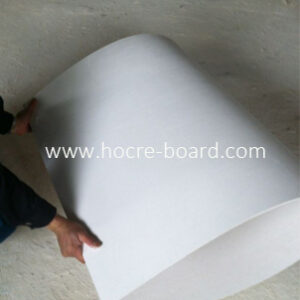
MGO Flexible Sheathing Sheet

 The concept of "MGO Flexible Sheathing Sheet" refers to the thinner, lower-density versions of Magnesium Oxide (MGO) board that exhibit a surprising degree of flexibility compared to traditional, rigid building materials like thicker cement board or plywood.

While MGO board is an inherently cementitious and durable material, manufacturers engineer specific products to be flexible enough for certain applications.

Key Characteristics of Flexible MGO Sheathing

The "flexibility" of MGO sheathing is a relative term. It is achieved through:

  1. Reduced Thickness: The flexibility is directly tied to the panel's thickness. MGO sheets in the 3 mm (1/8") to 6 mm (1/4") range are considered flexible, allowing them to bend significantly without breaking.
  2. Lower Density: These thinner, more flexible sheets often have a slightly lower density compared to the high-density structural floor panels, contributing to their improved workability.
  3. Fiberglass Reinforcement: Like all quality MGO products, these sheets contain multiple layers of high-tensile fiberglass mesh. The mesh is what allows the sheet to bend without fracturing the mineral core, much like rebar in concrete.

Primary Applications

The main purpose of flexible MGO sheathing is to conform to curved or non-planar surfaces, particularly in situations where high fire-resistance is required.

  • Curved Walls and Ceilings: The most common use is creating curved architectural features in highly fire-rated environments, such as lobby accents, curved partitions, or dome ceilings.
  • Mobile and Modular Construction: The light weight and flexibility make the thinner sheets easy to handle and ideal for use in mobile homes, RVs, and modular structures where minimizing weight is crucial.
  • Surface Backing/Underlayment: The thin sheets are often used as a fire-rated substrate for finishes like veneer, decorative laminates, or wallpaper, especially when non-combustibility is a requirement for the assembly.
  • Tile Backer: Thin MGO sheets (e.g., 21/4''or 6 mm) are popular as tile backer board in wet areas due to their excellent moisture and mold resistance.3

Bending Radius (Approximate)

The actual bending radius depends heavily on the specific manufacturer, density, and thickness. For thin, utility-grade MGO sheets 3 mm or 6 mm, the bending capacity can be quite impressive:

  • 3 mm (1/8"): Can often be bent to a radius as tight as 1 foot (300 mm) or less for gentle curves.
  • 6 mm (1/4"): Can typically be bent to a radius of approximately 2 feet (600 mm) or more

Important Note on Flexibility and Structural Integrity:

It is crucial to understand that MGO's flexibility is generally inversely proportional to its structural rating. The thin, flexible sheets are not typically used as load-bearing or structural sheathing (which requires 1/2'' or thicker panels) but rather as a non-structural fire- and moisture-resistant skin.


More  information, please visit at www.hocre-board.com or send message by whatsapp +86 15001321220